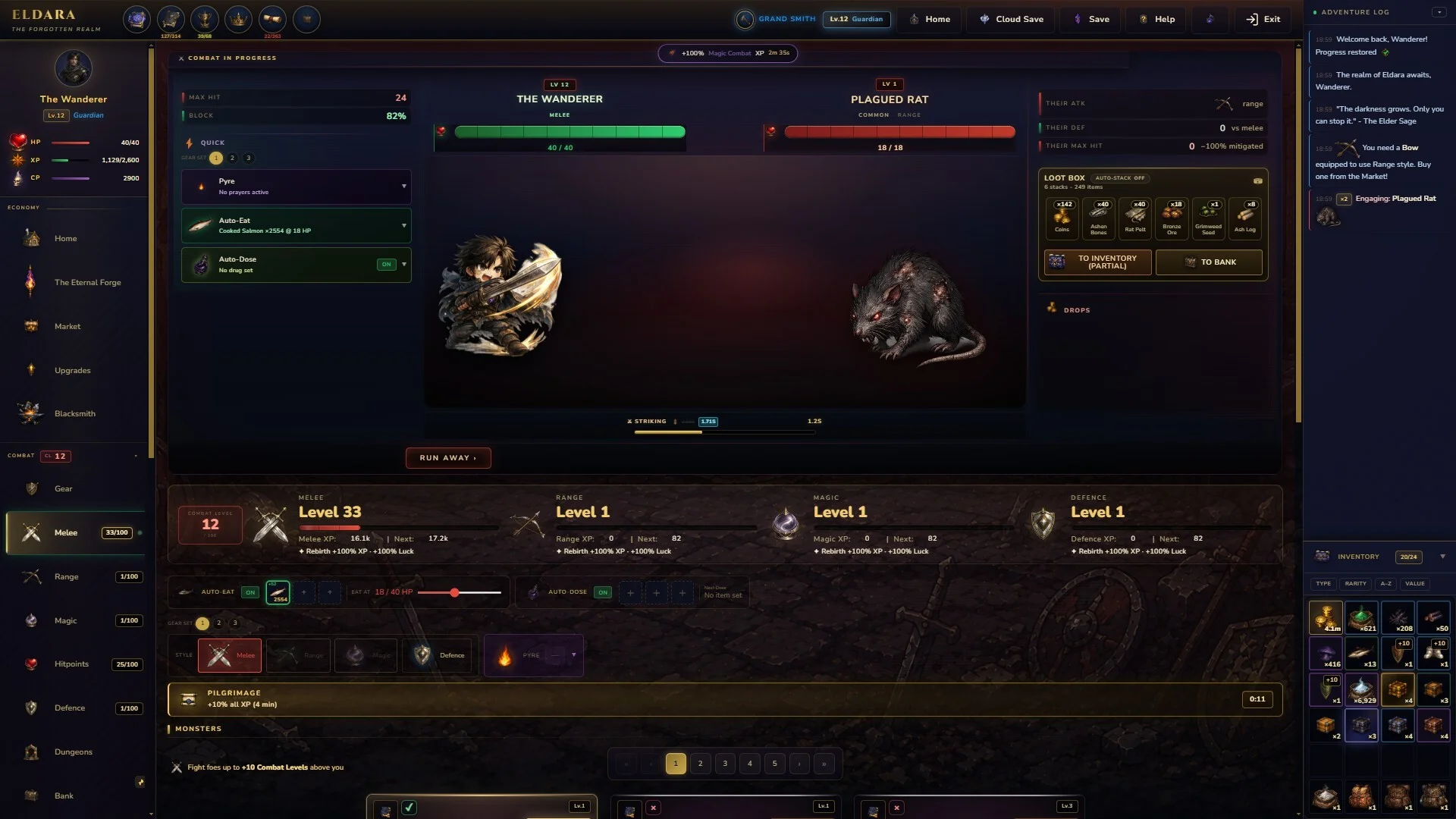
- Eldara skills include combat, gathering, production, utility, and progression-focused paths.
- Melee, range, and magic each use different gear tiers, spell schools, and enemy weaknesses.
- Gathering skills support crafting loops, equipment preparation, and steady long-term progress.
- Faction choices matter because six groups maintain rivalries and remember your decisions.
- Hardcore mode increases risk with one life, reduced gold and XP, and a permanent leaderboard grave.
Eldara skills: Understanding the Progression System
Eldara skills are designed as complete progression paths rather than filler activities. The official presentation describes each skill as having its own progression, equipment, monsters, and endgame goals. That structure makes skill selection more important than simply choosing the activity with the fastest short-term reward.
The skill roster covers combat disciplines alongside resource gathering, production, survival, and utility activities. Your best starting path depends on whether you want reliable combat power, flexible resource generation, or a broad account foundation.
Combat Skills
- Melee
- Range
- Magic
- Defence and HP
Gathering Skills
- Mining
- Wood
- Fishing
- Hunting
Production Skills
- Smithing
- Cooking
- Fletching
- Crafting
Utility Skills
- Fire
- Cultivate
- Cremate
- Thieving
The official page labels Eldara as a dark fantasy idle RPG with fourteen skills, three combat disciplines, faction politics, dungeons, bosses, hardcore mode, and rebirth systems. Its displayed skill list also names combat attributes and additional non-combat activities. For practical planning, treat the roster as a network of connected paths instead of isolated level bars.
| Skill Group | Main Function | Best Early Focus |
|---|---|---|
| Combat | Damage, survivability, enemy progression | Choose one primary attack style |
| Gathering | Supplies and raw materials | Support your preferred production loop |
| Production | Equipment, consumables, and crafted goods | Match production to gathered resources |
| Utility | Alternative progression and specialized rewards | Add after your core loop is stable |
Choose one combat identity and one supporting resource loop first. A focused foundation is easier to manage than spreading every skill evenly from the beginning.
Combat Disciplines and Enemy Matchups
Eldara offers three combat styles: melee, range, and magic. Each style has its own gear tiers, spell schools, and monster weaknesses. The official examples establish a clear matchup philosophy: skeletons resist melee, wraiths fear fire, and dragons are vulnerable to arrows.
These examples suggest that combat preparation should begin with the enemy rather than with a favorite weapon. Before entering a difficult encounter, identify the target’s resistance or weakness, then select the discipline and supporting skills that fit the matchup.
| Combat Discipline | Core Strength | Matchup Consideration | Supporting Skills |
|---|---|---|---|
| Melee | Direct close-range pressure | Skeletons resist melee | Defence, HP, Smithing |
| Range | Distance-based damage | Dragons fall to arrows | Fletching, Hunting, Crafting |
| Magic | Spell-based specialization | Spell schools address different threats | Crafting, Fire, Cultivate |
| Defence and HP | Survivability foundation | Helps sustain difficult encounters | Smithing, Cooking, Mining |
Melee
Melee is the most direct combat identity and pairs naturally with Defence and HP. It is a sensible choice when you prefer close-range pressure and a sturdier progression profile. However, the skeleton example shows why melee should not be treated as the answer to every encounter.
Range
Range becomes especially valuable when a target is vulnerable to arrows. Its natural supporting path includes Fletching, Hunting, and Crafting, allowing combat preparation to connect with resource and production activities.
Magic
Magic is built around spell schools and enemy weaknesses. Fire is particularly relevant against wraiths in the official examples, making magical preparation useful when an encounter rewards elemental or school-based specialization.
Defence and HP
Defence and HP are not presented as one of the three attack styles, but they are listed among the progression skills. They provide the durability needed to stay in longer fights, push threat ladders, and reduce the cost of failed preparation.
Do not judge a combat style only by general damage. Enemy resistance and weakness can change which discipline is the practical choice for a dungeon or boss.
Step-by-Step Skill Progression Plan
A strong opening plan should create a repeatable loop: gather resources, convert them into useful preparation, and test that preparation against appropriate enemies. The following route avoids unnecessary specialization while keeping future options open.
Select a Primary Combat Style
Start with melee, range, or magic based on the enemies and gear path you want to pursue. Keep Defence and HP in consideration so your main style can survive longer encounters.
Choose One Supporting Resource Loop
Pair your combat identity with a practical gathering or production route. Range can connect with Hunting and Fletching, while melee naturally benefits from Mining and Smithing.
Build Preparation Before Pushing
Use crafting, cooking, fire, or related utility skills to improve your readiness before entering dungeons. Preparation should support the next encounter rather than level unrelated skills without a purpose.
Test the Enemy Matchup
Review the target’s resistance or weakness, then adjust your discipline and equipment. Skeletons, wraiths, and dragons each demonstrate why flexible planning is valuable.
Expand After Your Core Loop Works
Add a second combat option, faction activity, or production skill once your primary progression loop feels stable. This creates flexibility without sacrificing early momentum.
| Progression Stage | Recommended Action | Reason |
|---|---|---|
| Opening | Pick one attack style | Reduces early resource spread |
| Foundation | Add one gathering or production partner | Creates a repeatable preparation loop |
| Dungeon Preparation | Raise survivability and supplies | Supports multi-stage encounters |
| Mid Progression | Add matchup coverage | Helps answer resistant enemies |
| Rebirth Planning | Identify permanent multiplier goals | Makes resets more deliberate |
How to Pair Skills
- Melee plus Mining and Smithing: A natural equipment-focused path for players who want direct combat preparation.
- Range plus Hunting and Fletching: A themed arrow-focused route that connects gathering with ranged damage.
- Magic plus Fire and Crafting: A flexible specialization for spell-based encounters and elemental threats.
- Defence and HP plus Cooking: A durability-oriented foundation for longer fights and dungeon attempts.
- Thieving plus faction goals: A utility route that may suit players who enjoy alternative progression and political choices.
These pairings are planning frameworks, not fixed classes. Eldara’s systems are presented as interconnected, so a character can gradually add new skills when the next dungeon, faction, or rebirth objective demands it.
For a dependable first character, establish one combat discipline, one matching production loop, and enough Defence or HP to handle multi-stage content.
Dungeons, Factions, and Skill Priorities
Skills become more meaningful when they support the wider world. Eldara includes multi-stage dungeons and bosses ranging from the Sunken Crypt to the throne of Ignarath. Each dungeon has its own loot table, monsters, and threat ladder, so a single universal build may not perform equally well everywhere.
The six named factions are the Ashen Legion, Verdant Circle, Merchant Guild, Mages’ Conclave, Cultists of Ignarath, and the Wanderers. Their rivalries mean that faction selection is part of progression planning, not merely a cosmetic choice.
| World System | What It Adds | Skill Planning Question |
|---|---|---|
| Dungeons | Multi-stage fights and unique loot tables | Which discipline handles the enemy lineup? |
| Bosses | High-threat encounters | Is your gear and survivability sufficient? |
| Factions | Rivalries and lasting political consequences | Which side supports your long-term goals? |
| Threat Ladders | Escalating encounter pressure | Can your preparation loop keep pace? |
| Rebirth | Permanent multipliers and late-game access | What should improve after a reset? |
Faction Planning
Before choosing a side, consider how its identity fits your preferred playstyle:
- Ashen Legion: A faction associated with the realm’s military and conflict-oriented themes.
- Verdant Circle: A natural fit for players interested in the world’s cultivation and wilderness themes.
- Merchant Guild: A practical choice for players who enjoy resource flow, trade-oriented planning, and production.
- Mages’ Conclave: A strong thematic match for magic, spell schools, and arcane progression.
- Cultists of Ignarath: Connected to the central dark-fantasy conflict surrounding Ignarath.
- Wanderers: A lore-focused path tied to the roads, ruins, and remembered history of Eldara.
The available information establishes faction rivalries and remembered decisions, but it does not define a universal best faction. Choose based on the role, story direction, and skill relationships you want to explore.
Rebirth and Prestige
Rebirth resets your character in exchange for permanent multipliers and access to late-game content. The official description states that scaling can reach up to 6× and follows an additive curve designed to avoid uncontrolled idle-game inflation.
That makes rebirth a planning tool rather than an emergency button. Before resetting, identify which skills benefited most from the current cycle and which permanent improvement will make the next cycle more efficient.
The official Eldara: The Forgotten Realm page covers the skill roster, combat styles, factions, dungeons, hardcore mode, and rebirth systems.
Hardcore Mode and Long-Term Skill Goals
Hardcore mode changes the value of every decision. Eldara describes it as a one-life mode with half the gold, half the XP, and a permanent grave on the leaderboard when the run ends. That ruleset favors consistency over ambitious experimentation.
A sensible hardcore character should prioritize survival, controlled progression, and matchup awareness. Avoid entering a dungeon simply because your damage appears strong; multi-stage encounters can expose weaknesses that are not visible during routine farming.
Skill Progression Checklist:
- Choose a primary combat discipline and identify its main weakness
- Pair combat with one gathering or production skill
- Raise Defence and HP before attempting high-threat encounters
- Prepare a matchup-specific response for resistant enemies
- Plan a rebirth target before resetting your character
| Mode | Main Risk | Better Skill Priority |
|---|---|---|
| Standard | Inefficient resource spread | Focused progression with gradual expansion |
| Hardcore | Permanent run loss | Defence, HP, preparation, and matchup checks |
| Rebirth Cycle | Resetting without a clear benefit | Permanent multipliers and late-game unlock planning |
Practical Hardcore Habits
- Maintain a reliable supply and preparation loop before pushing threat levels.
- Avoid assuming that one combat discipline handles every monster.
- Use ranged or magic options when the matchup makes melee inefficient.
- Treat faction decisions as long-term commitments because the world remembers them.
- Reset only when the permanent multiplier or unlock provides a meaningful next-cycle benefit.
In one-life progression, a slower successful cycle is usually more valuable than a risky attempt built around untested damage assumptions.
Eldara Skills FAQ
Q: How many skills does Eldara have?
The official Eldara page describes the game as having fourteen skills, while its displayed progression list names combat attributes and additional activities such as Mining, Smithing, Fishing, Cooking, Fletching, Fire, Cultivate, Cremate, Crafting, Thieving, and Hunting.
Q: Which combat style should I choose first?
Choose between melee, range, and magic based on the matchups and supporting skills you want to build. Melee pairs naturally with Defence, HP, Mining, and Smithing; range connects with Hunting and Fletching; magic benefits from Fire and Crafting.
Q: Are Eldara skills separate from faction progression?
They appear to be connected parts of the same world progression. Eldara features six rival factions that remember player decisions, so skill development should be planned alongside political and dungeon goals.
Q: What makes Hardcore mode different?
Hardcore mode gives the character one life, reduces gold and XP, and ends the run with a permanent grave on the leaderboard after death. Defensive preparation and careful enemy matching are especially important.
The best Eldara skills plan is flexible but focused: establish a combat identity, support it with production, study enemy weaknesses, and expand after your core loop is reliable.