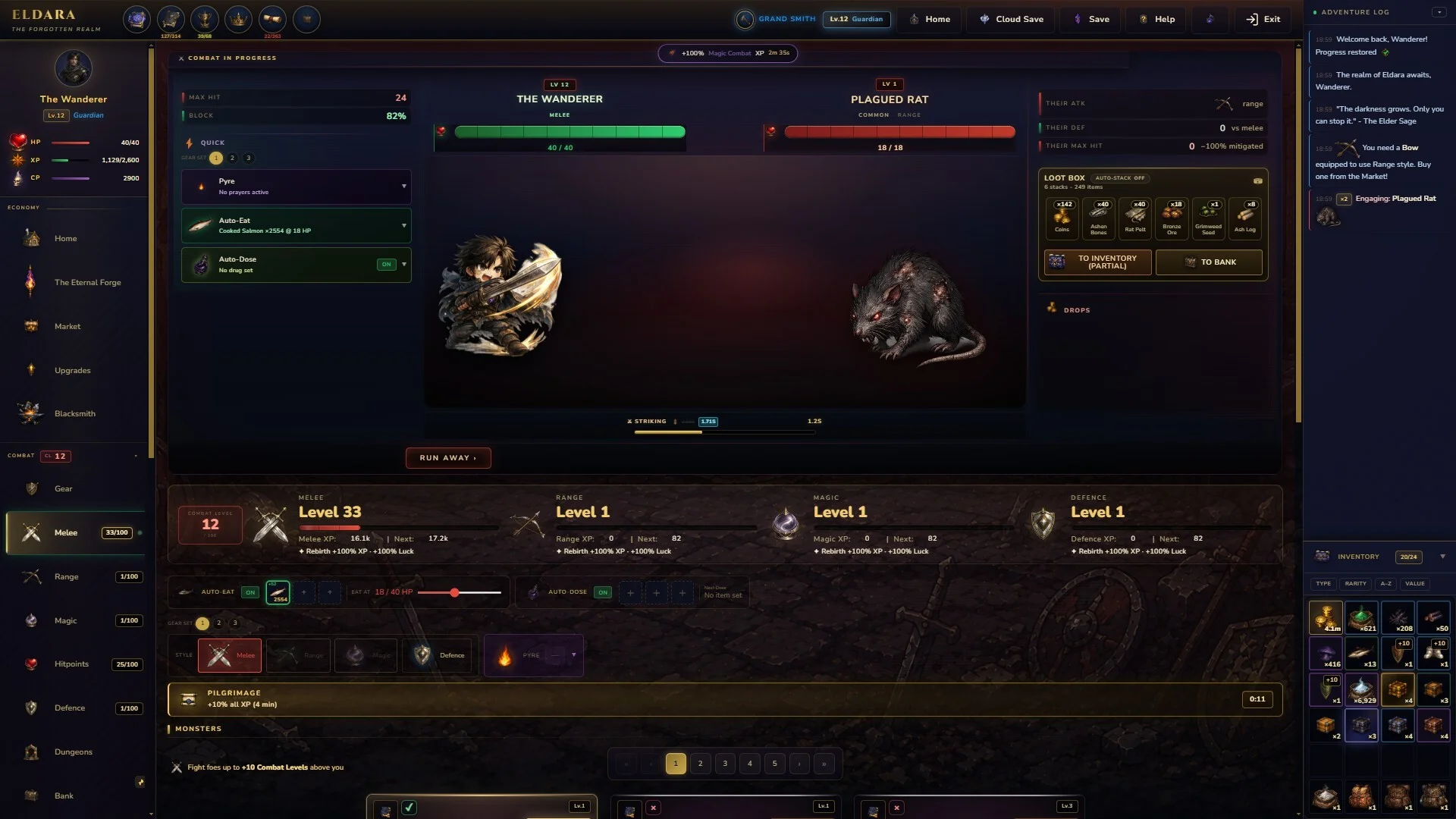
- Eldara best skills depend on your role, combat range, and upgrade access.
- Survival skills usually provide the safest value during early progression.
- Offensive skills become stronger when they match your attack pattern.
- Utility skills are best when they solve movement, range, or resource problems.
- Flexible builds leave room for later upgrades instead of spending every point immediately.
Eldara Best Skills: How to Rank Them
When comparing Eldara best skills, rank each option by the problem it solves rather than by its description alone. A damage skill may look impressive but offer limited value if your character struggles to reach targets. Likewise, a defensive upgrade can outperform a stronger attack when it lets you survive longer encounters and continue progressing without frequent resets.
The most reliable ranking method uses four questions:
- Does the skill improve your main combat pattern?
- Does it help during both normal encounters and elite fights?
- Can it be acquired later through progression?
- Does it remain useful after your build gains better equipment or abilities?
A strong starting skill usually has immediate value, supports your chosen role, and is difficult to replace. A weaker early choice is often an upgrade that can be learned naturally later or one that only works in a narrow situation.
| Ranking Factor | High-Value Skill | Lower-Value Skill |
|---|---|---|
| Immediate impact | Changes how safely or efficiently you fight | Provides a small numerical increase |
| Long-term value | Remains useful across several build stages | Becomes redundant after one upgrade |
| Availability | Difficult to replace through normal progression | Easy to unlock later |
| Role fit | Matches melee, ranged, caster, or support play | Conflicts with your main attack pattern |
Core Combat
- Improves your primary attack
- Helps secure reliable takedowns
- Best for focused builds
Survival
- Reduces downtime
- Supports longer encounters
- Valuable for solo progression
Utility
- Solves range or movement issues
- Helps with unusual encounters
- Strong when used deliberately
Prioritize skills that improve your entire combat loop. A dependable attack, recovery option, or positioning tool usually beats a flashy upgrade with limited uptime.
Best Offensive Skills by Combat Role
Offensive skills should be judged by consistency, not only by their maximum damage. The best attack upgrade is the one you can activate often, aim reliably, and combine with the rest of your loadout. Before selecting an offensive skill, identify whether your build wins through repeated melee attacks, ranged pressure, spell rotation, or burst damage.
Melee characters generally benefit from skills that improve contact damage, attack frequency, or the ability to remain active inside a group of enemies. Ranged characters should look for accuracy, reach, projectile reliability, and tools that prevent enemies from closing the distance. Casters need upgrades that support resource efficiency, effect duration, or reliable area coverage.
| Combat Role | Preferred Skill Profile | Main Benefit | Common Risk |
|---|---|---|---|
| Melee | Sustained damage, attack speed, contact effects | Wins extended close-range fights | Requires safe positioning |
| Ranged | Accuracy, range, projectile damage | Applies pressure before retaliation | Loses value when surrounded |
| Caster | Resource efficiency, area effects, cooldown support | Controls groups and encounter pace | Dependent on resource management |
| Hybrid | Flexible damage and mobility | Adapts to changing targets | May lack peak specialization |
A useful offensive priority is:
- Improve the attack you use most often.
- Add a skill that covers your biggest damage gap.
- Select a control or mobility option if enemies regularly interrupt you.
- Invest in specialized effects only after the core rotation feels stable.
Do not stack several skills that perform the same job unless the system clearly rewards that combination. For example, multiple burst effects may look powerful but leave your build weak between cooldowns. A sustained attack paired with one reliable burst option is often easier to manage.
Do not spend every early point on damage before checking whether your build can survive contact, maintain range, or recover between encounters.
Defensive and Recovery Skills
Defense determines how consistently a build can convert good decisions into successful encounters. A character with high damage but poor recovery may need to retreat after every fight, while a slightly slower build can continue through several battles with fewer interruptions.
Defensive skills usually fall into three groups: direct mitigation, recovery, and avoidance. Mitigation reduces incoming damage. Recovery restores health or another combat resource. Avoidance prevents attacks through movement, resistance, evasion, or positioning. The strongest option depends on how your build takes damage.
| Defensive Category | Best Use Case | Strength | Limitation |
|---|---|---|---|
| Damage reduction | Frequent unavoidable hits | Reliable in direct combat | May not help against special effects |
| Recovery | Long encounters or repeated battles | Extends combat endurance | Often requires successful actions |
| Evasion or mobility | Fast enemies and ranged threats | Prevents damage before it occurs | Less dependable when cornered |
| Resistance | Encounters built around one damage type | Excellent against matching threats | Narrow outside that encounter type |
For most developing builds, choose one dependable defensive layer before collecting several minor bonuses. Recovery is particularly useful when your character attacks frequently or can safely remain engaged. Avoidance is stronger when the battlefield gives you room to maneuver. Resistance becomes a priority when a specific enemy type repeatedly defeats your build.
A practical defensive setup should answer these questions:
- What usually causes failed encounters?
- Can the skill work without perfect timing?
- Does it protect against the threats you meet most often?
- Will it remain useful when enemy damage increases?
Reliable Defense
- Consistent value in ordinary fights
- Good for learning encounters
- Supports steady progression
Recovery Focus
- Reduces downtime
- Rewards active combat
- Strong for extended battles
Avoidance Focus
- Best for mobile players
- Rewards positioning
- Requires more execution
If you regularly lose with enemies nearly defeated, add recovery or mitigation before adding another damage skill. Stability often creates more progress than peak output.
Utility Skills and Upgrade Timing
Utility skills rarely top a raw damage chart, but they can define how a build handles difficult maps and awkward encounters. Movement, range, crowd control, resource support, and interaction improvements all belong in this category. Their value rises when they solve a problem that your core attacks cannot address.
A utility skill is worth an early investment when it improves access to targets, prevents repeated interruptions, or opens a safer route through dangerous areas. If the same function is available from equipment, companions, consumables, or later progression, delay it until your core build is established.
| Utility Function | When to Prioritize | When to Delay |
|---|---|---|
| Mobility | Enemies control distance or terrain blocks progress | Your movement is already reliable |
| Range extension | Melee attacks cannot reach priority targets | Encounters happen in tight spaces |
| Crowd control | Groups interrupt your main rotation | You already defeat groups quickly |
| Resource support | Skills frequently run out of energy or charges | Your rotation has low resource demand |
| Exploration utility | Maps contain barriers or optional routes | Combat progression is the immediate goal |
Use this three-stage timing rule:
| Stage | Skill Focus | Reason |
|---|---|---|
| Early | One core attack and one survival tool | Establishes a dependable combat loop |
| Mid | Role-specific damage or utility | Solves the weaknesses revealed by progression |
| Late | Specialization and encounter counters | Optimizes the build for advanced challenges |
Identify the Main Failure Point
Review the last several difficult encounters. Decide whether the problem was low damage, poor range, limited recovery, weak positioning, or resource loss.
Choose One Corrective Skill
Select the skill that directly addresses that weakness. Avoid buying several options before testing whether one upgrade solves the issue.
Test the Skill in Normal Encounters
Use the new setup against common enemies first. Check activation frequency, resource cost, positioning requirements, and effect duration.
Validate It Against Elite Threats
Take the skill into a harder encounter and note whether it improves survival, clear speed, or target control.
Commit to Specialization
Once the core loop is reliable, invest remaining points into the damage, defense, or utility branch that best matches your long-term role.
A skill that is excellent later may be inefficient as a first purchase. Build around your current encounters, then refine the setup as new threats appear.
Skill Setup Checklist for New Builds
Use this checklist whenever you create a new Eldara build or respec an existing one. It is designed to prevent common mistakes such as copying a specialized setup before understanding its requirements.
Skill Planning Checklist:
- Choose a primary combat role before spending skill points
- Confirm that the first offensive skill matches your most-used attack
- Add one dependable defensive, recovery, or mobility option
- Check whether a desired skill can be obtained later through progression
- Test the setup against normal and elite encounters before specializing
The following comparison can help determine what to select when several skills appear equally attractive:
| Situation | First Priority | Second Priority |
|---|---|---|
| You die before using your rotation | Defense or recovery | Reliable damage |
| Enemies escape your attacks | Mobility or range | Burst damage |
| Groups overwhelm you | Area control | Sustained damage |
| Resources run out quickly | Resource support | Lower-cost attacks |
| Encounters are already safe | Damage specialization | Utility for faster clears |
Remember that a build is not judged by its skill list alone. The same skill can perform differently depending on equipment, attack timing, encounter layout, and player habits. Treat rankings as a starting point, then adjust after observing actual combat results.
Keep one flexible point available when possible. It gives you room to respond to a new encounter instead of forcing a complete rebuild after every difficulty spike.
Advanced Rankings and Final Recommendations
For advanced players, the most useful ranking is not a universal tier list. It is a priority order based on role, access, and encounter demands. A skill that ranks highly for a solo melee build may be unnecessary for a ranged specialist, while a utility upgrade that seems modest can become essential on maps that restrict movement.
Use the following decision model:
| Build Goal | Highest Priority | Secondary Priority | Avoid |
|---|---|---|---|
| Safe solo progression | Recovery or mitigation | Consistent damage | Narrow burst-only tools |
| Fast encounter clears | Core damage | Mobility or control | Excess defensive stacking |
| Ranged control | Range and accuracy | Escape tools | Close-range specialization |
| Group fighting | Area damage or control | Resource support | Single-target-only upgrades |
| Flexible exploration | Mobility utility | Reliable defense | Skills tied to one encounter type |
The best starting setup normally contains three layers:
- A primary tool: the attack or spell that defines your build.
- A stabilizer: recovery, mitigation, mobility, or control.
- A growth option: a skill that becomes stronger as your equipment and progression improve.
This structure is more adaptable than selecting several high-cost skills that all require the same conditions. It also makes testing easier because each skill has a distinct purpose.
When comparing two final choices, prefer the option that:
- Works in more encounter types.
- Requires fewer perfect conditions.
- Complements your current attack pattern.
- Is difficult to replace with normal progression.
- Improves both survival and effective damage over time.
The strongest Eldara build is usually the one with a clear combat identity, one reliable safety layer, and enough flexibility to answer new threats.
Q: What are the Eldara best skills for a new player?
Start with one consistent offensive skill and one dependable survival, recovery, or mobility option. This combination is easier to test than a highly specialized damage setup.
Q: Should I prioritize damage or defense first?
Prioritize whichever problem is causing failed encounters. If you survive comfortably, take damage; if you are defeated before finishing fights, choose defense or recovery first.
Q: Are utility skills worth early skill points?
Yes, when they solve a repeated problem such as poor range, blocked movement, crowd control, or resource shortages. Delay them when the same function is already covered elsewhere.
Q: Can I copy one skill build for every role?
No. Melee, ranged, caster, hybrid, solo, and group-focused builds have different priorities. Use the ranking framework, then adjust skills to match your combat pattern and current encounters.