- Eldara realm: A reincarnation realm connected to karmic judgment and transformation
- Karmic passage: Bad Karma must be resolved through an endless jungle-like Hell
- Known rulers: Queen Thalindra and the Goodness of Death govern this realm
- Visible changes: Some souls experience altered appearances or receive tribal-like clothing
- Lore source: The official Eldara game page introduces the realm and its central mystery
Eldara Realm: Core Lore and Purpose
The Eldara realm is described as the place a soul enters to pursue reincarnation. Its role is not presented as a conventional location for exploration, combat progression, or item collection. Instead, Eldara functions as a metaphysical stage where a person’s Bad Karma must be completed before reincarnation can occur.
The known description connects Eldara with Hell, an environment characterized as an endless jungle without water or rest. This setting gives the realm a severe and exhausting identity. The punishment is not defined only by physical danger; the absence of relief suggests that endurance, consequence, and spiritual exhaustion are central themes.
The current reference material identifies Queen Thalindra and the Goodness of Death as the rulers of Hell within Eldara. Their exact relationship, authority, and individual responsibilities are not fully detailed, so readers should separate confirmed lore from interpretation.
| Lore Element | Confirmed Description | Current Reading |
|---|---|---|
| Realm purpose | A place connected to reincarnation | Eldara is a transitional afterlife realm |
| Karmic condition | Bad Karma must finish before passage onward | Progress is tied to moral consequence |
| Hell environment | An endless jungle without water or rest | The setting emphasizes deprivation and endurance |
| Rulers | Queen Thalindra and the Goodness of Death | Both are associated with ruling Hell |
| Final outcome | Reincarnation | The realm appears to prepare souls for another existence |
Treat Eldara as a lore location first. The available canon establishes its purpose and atmosphere, but does not confirm a detailed map, quest system, or playable progression route.
Reincarnation
Eldara is the realm a soul passes through in pursuit of another life. This makes transition its defining narrative function.
Bad Karma
Souls remain connected to unresolved Bad Karma. The wording suggests consequence must be completed before reincarnation.
Endless Jungle
Hell is described as a jungle without water or rest, creating an atmosphere of prolonged hardship.
Transformation
Some people may experience changes in appearance or clothing while in Hell, linking punishment with identity.
Hell, Bad Karma, and the Reincarnation Passage
Within the known lore, Hell is not a separate subject from Eldara. It is the punishing environment associated with the realm’s reincarnation process. A soul enters this harsh condition while its Bad Karma remains unresolved, then continues until that karmic burden is finished.
The description does not provide a numerical morality scale, a time limit, or a list of offenses. It is therefore more accurate to discuss Bad Karma as a narrative force rather than as a measurable statistic. This distinction matters for wiki readers: there is no confirmed evidence for ranks, points, rewards, or selectable routes.
The environment’s lack of water and rest is especially important. These details establish deprivation as a defining feature of Hell. The jungle is not framed as a lush or restorative wilderness. Its endless quality also removes the comfort of a clearly stated destination, making the journey feel continuous until the required karmic passage is complete.
| Feature | What the Lore Establishes | What It Does Not Establish |
|---|---|---|
| Bad Karma | Must be finished before reincarnation | No confirmed score, meter, or ranking |
| Jungle | Hell has an endless jungle setting | No confirmed regions, landmarks, or map |
| Water | The environment lacks water | No confirmed survival mechanics |
| Rest | Souls receive no rest in the described Hell | No confirmed duration or sleep system |
| Reincarnation | It is the purpose connected to Eldara | No confirmed ritual or final gate |
A useful way to understand the passage is to view it as a sequence of consequences:
Enter the Reincarnation Realm
The soul reaches Eldara, the realm associated with moving toward reincarnation. The available lore does not specify whether every soul follows the same arrival process.
Face Unresolved Bad Karma
Souls remain in Hell while their Bad Karma is unfinished. This is the central condition governing the punishment described in the canon.
Endure the Endless Jungle
The soul experiences a jungle without water or rest. The environment reinforces the themes of deprivation, isolation, and prolonged consequence.
Complete the Karmic Burden
Once the Bad Karma is finished, the punishment described for that passage reaches its required conclusion. The exact completion event remains unspecified.
Proceed Toward Reincarnation
Eldara’s stated purpose points toward reincarnation, although the canon does not yet explain the destination, timing, or nature of the next life.
Do not add invented karma values, punishment tiers, escape methods, or reincarnation rewards. None of those systems are confirmed in the current Eldara reference.
Queen Thalindra and the Goodness of Death
The rulers associated with Eldara’s Hell are Queen Thalindra and the Goodness of Death. Their names create a deliberate contrast. One is presented as a monarch, while the other appears to represent an abstract or personified principle. Together, they give Hell both political and metaphysical dimensions.
Queen Thalindra’s title implies organized authority. However, the current description does not state whether she judges souls, commands enforcers, controls the jungle, or decides when Bad Karma is complete. Those possibilities may support future theories, but they should not be treated as established facts.
The Goodness of Death is similarly open to interpretation. The name may indicate that death has a beneficial or necessary role in the world’s cosmic order. It could also represent a figure, force, or title. Until additional canon clarifies the subject, the safest description is that the Goodness of Death is a ruling presence associated with Hell.
| Figure | Confirmed Role | Safe Interpretation |
|---|---|---|
| Queen Thalindra | One of the rulers of Hell | A sovereign connected to the realm’s authority |
| The Goodness of Death | One of the rulers of Hell | A personified or titled force linked to death |
| Both figures | Govern the Hell associated with Eldara | They represent the realm’s controlling powers |
| Their judgment | Not directly explained | Avoid assigning specific legal or moral procedures |
The relationship between the two rulers is one of the most promising open questions in the lore. They may share authority, represent opposing philosophies, or embody different parts of the reincarnation process. The existing material does not choose between these interpretations.
The strongest confirmed point is shared rule. Any theory about alliance, conflict, divine purpose, or judgment should be labeled as speculation until the canon adds more detail.
Appearance Changes and Identity in Hell
Eldara’s Hell can affect how people look. The known description states that some people may have their appearance changed or receive a new tribal-like outfit. This means the realm’s punishment is not necessarily uniform. Different souls may experience different visible consequences.
Amber is given as a notable example. During her time in Hell, she was completely naked and had her hands chained in large handcuffs. This detail presents a harsher and more individualized form of punishment than a simple costume change. It also shows that physical restriction and exposure can be part of the realm’s visual storytelling.
These details should be handled carefully. The available lore does not explain whether appearance changes are caused by the soul’s past actions, by the rulers, or by the environment itself. It also does not establish that every person receives the same outfit, restraints, or transformation.
| Subject | Recorded Condition | Canon Status |
|---|---|---|
| Some people in Hell | Appearance may change | Confirmed general detail |
| Some people in Hell | May receive a tribal-like outfit | Confirmed general detail |
| Amber | Completely naked during her time in Hell | Confirmed example |
| Amber | Hands chained in large handcuffs | Confirmed example |
| All souls | Identical appearance or punishment | Not confirmed |
Appearance in Eldara may therefore communicate status, suffering, history, or loss of identity. A tribal-like outfit could signify that the soul has entered a new social or spiritual condition. Chains may represent confinement, judgment, or a punishment tied to an individual case. These are useful analytical possibilities, but not verified mechanics.
Eldara Lore Review Checklist:
- Identify Eldara as a reincarnation realm
- Connect Hell with unfinished Bad Karma
- Remember the endless jungle lacks water and rest
- Name Queen Thalindra and the Goodness of Death as rulers
- Separate confirmed appearance details from speculation
When documenting a soul’s appearance, record the visible detail first and avoid assigning a cause unless the story explicitly confirms one.
Known Facts, Open Questions, and Canon Tracking
The Eldara entry provides a focused foundation, but its short description leaves several major areas open. A strong fan wiki article should preserve those gaps instead of filling them with unsupported details. This approach keeps the page useful as new canon becomes available.
The table below separates established information from questions that remain unresolved.
| Topic | Confirmed in Current Lore | Open Question |
|---|---|---|
| Realm identity | Eldara is the reincarnation realm | How does a soul enter it? |
| Hell | An endless jungle without water or rest | Is the jungle literal, spiritual, or both? |
| Karma | Bad Karma must finish | What determines completion? |
| Leadership | Queen Thalindra and the Goodness of Death rule Hell | Do they share equal authority? |
| Punishment | Appearance changes and restraints may occur | Are punishments based on individual sins? |
| Reincarnation | It is the realm’s stated purpose | What happens after the passage ends? |
For readers building timelines or character pages, the safest method is to use a three-level evidence model:
| Evidence Level | Use in a Wiki Article | Example |
|---|---|---|
| Confirmed | State directly as canon | Eldara is connected to reincarnation |
| Supported reading | Explain as interpretation | Hell symbolizes prolonged consequence |
| Speculation | Mark clearly as a theory | The rulers may represent different aspects of death |
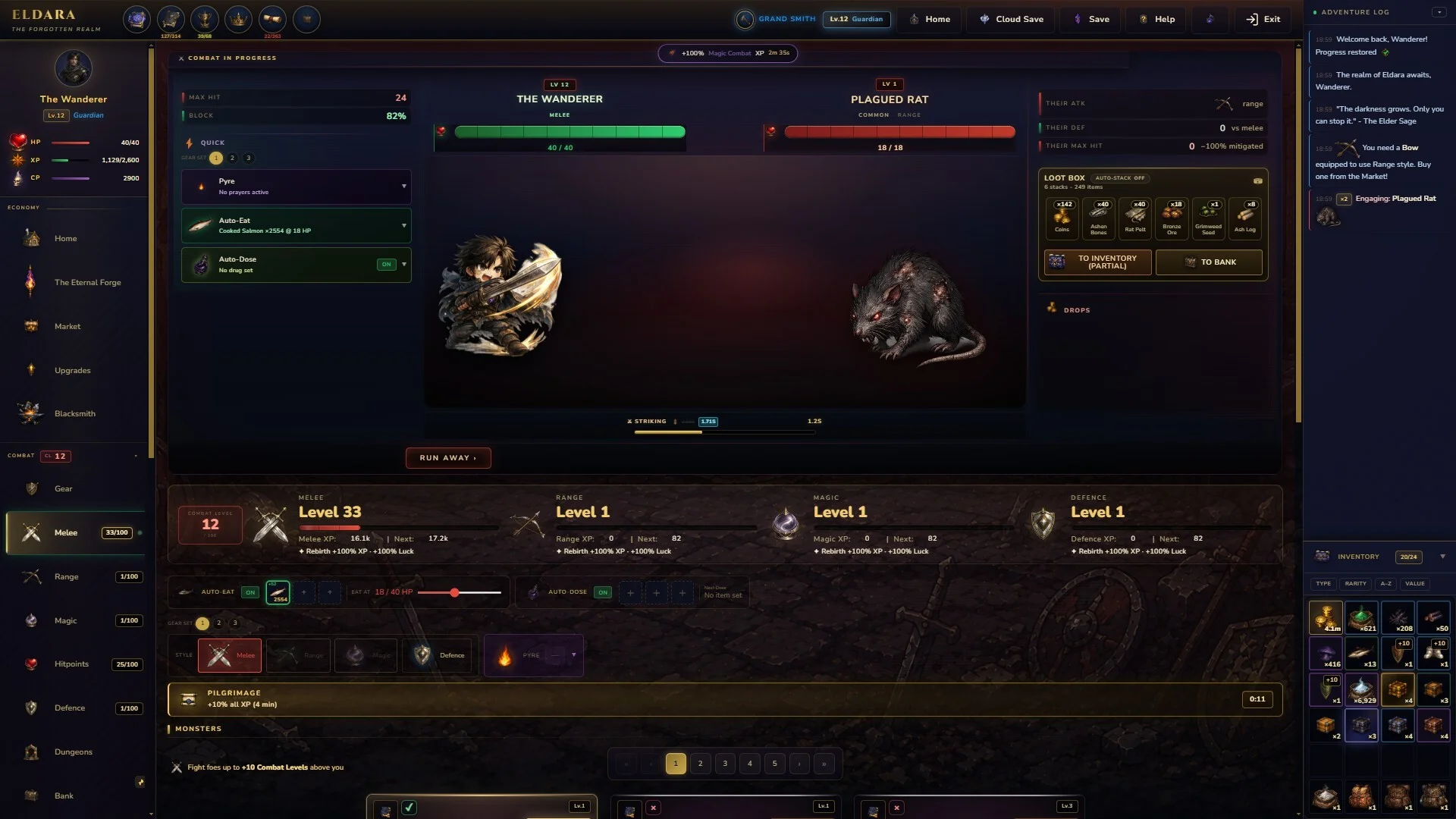
The official Eldara game page offers the developer's own framing of the realm, its factions, and its central mystery.
Use direct, cautious wording: “the lore describes,” “the entry identifies,” and “the canon does not yet specify.” This keeps theory separate from fact.
Q: What is the Eldara realm?
Eldara is described as the reincarnation realm. Souls pass through it while connected to the process of resolving Bad Karma before reincarnation.
Q: What is Hell in Eldara?
Hell is the harsh environment associated with the realm’s karmic punishment. It is described as an endless jungle without water or rest.
Q: Who rules the Hell connected to Eldara?
The current lore identifies Queen Thalindra and the Goodness of Death as the rulers of Hell.
Q: Does every soul receive the same punishment or appearance?
No uniform system is confirmed. The lore says some people may change appearance or receive tribal-like clothing, while Amber is specifically described with chains and no clothing.