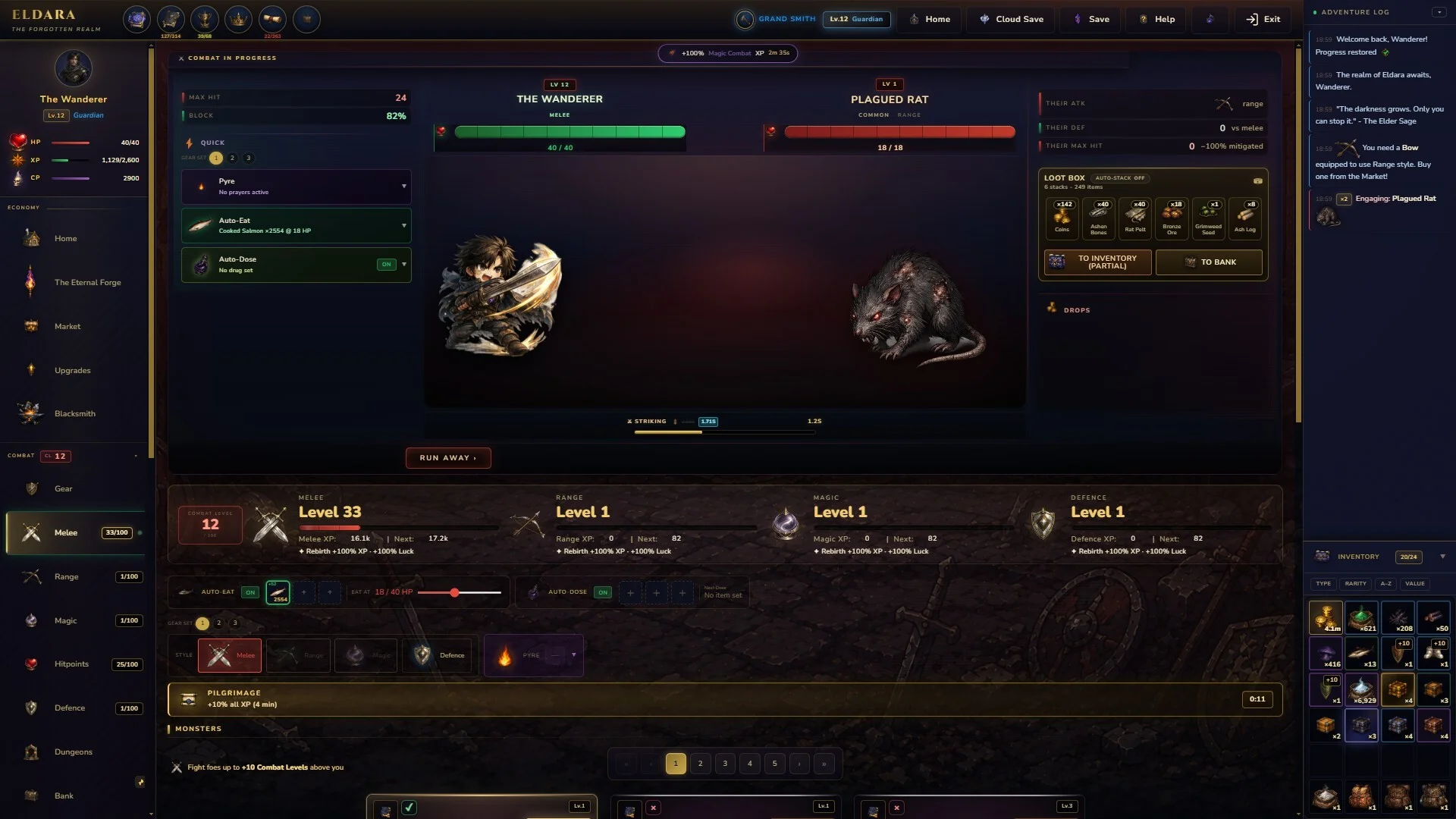
- Eldara emerald leather scrap has no verified acquisition method in the currently indexed material.
- Best approach: Check item sources, crafting screens, loot tables, and active community reports.
- Avoid assumptions: Similar names such as ruby leather may not share the same source.
- Record evidence: Save the item description, location, activity, and reward screen before reporting a find.
- Community lead: The Eldara Steam discussion index lists a related leather-acquisition question.
Eldara emerald leather scrap: Verified Status
Eldara emerald leather scrap is best treated as an item-tracking question until its acquisition route is confirmed in-game. The available Eldara community material does not point to a specific recipe, enemy drop, NPC vendor, gathering node, quest reward, or area associated with the item. A careful in-game search is the most reliable way to pin it down.
The Eldara Steam community discussion index currently displays a related topic titled “How do I acquire emerald leather/ruby leather/etc?” alongside other Eldara discussions. The listing confirms that players are actively asking about this item family, but it does not provide the answer or prove a specific source.
| Verification point | Current status | What it means |
|---|---|---|
| Item name | Emerald leather and related variants are referenced by players | The terminology is worth checking against the in-game tooltip |
| Confirmed location | Not established | Do not claim a zone or map node without direct evidence |
| Confirmed enemy drop | Not established | Avoid assigning the material to a creature or boss by name similarity |
| Confirmed crafting recipe | Not established | Check recipe lists, but do not assume leather scraps are an ingredient |
| Confirmed vendor | Not established | A merchant source needs an observed purchase screen |
| Community interest | Confirmed | The Eldara discussion index includes a related acquisition question |
Do not spend valuable resources, reset progress, or follow a supposed farming route based only on an item name or an unsourced community comment.
The most important distinction is between a question being visible and a method being verified. A discussion title can point to a knowledge gap, but it cannot confirm that emerald leather scrap comes from skinning, salvaging, crafting, trading, or a hidden quest chain.
Where to Look for the Acquisition Route
A structured search can narrow down the source without turning guesses into wiki facts. Start with systems that naturally display item origins, then move toward repeatable activities. Record each result as confirmed, unconfirmed, or disproven.
Item Details
Check the full tooltip, flavor text, rarity label, category, and any “source” or “used in” fields. Compare the wording with other leather variants.
Crafting Menus
Search every relevant recipe category, including hidden, locked, upgrade, and refinement entries. A missing recipe is not proof that the item cannot be crafted.
Loot Sources
Review activity rewards, chest contents, enemy drops, and resource nodes. Confirm the result from an actual reward or inventory screen.
Community Reports
Treat player reports as leads. Ask for the location, activity, screenshot, and item tooltip before adding a method to a guide.
Use the comparison table below to keep similar terms separate. “Emerald leather,” “emerald leather scrap,” and “ruby leather” may describe different tiers, variants, or materials. Their names alone do not prove that they share an acquisition path.
| Search term | Possible relationship | Verification needed |
|---|---|---|
| Emerald leather scrap | Target material in this guide | Exact tooltip and inventory icon |
| Emerald leather | Possible refined or separate item | Item description and crafting relationship |
| Ruby leather | Related variant mentioned by players | Independent source confirmation |
| Leather scrap | Possible generic material | Category, rarity, and recipe usage |
| Scrap material | Broad classification | Confirm whether the game uses this naming convention |
Search priority
Follow this order when investigating:
- Open the item from the inventory, storage, or crafting interface.
- Read every available tooltip field, including locked-source text.
- Search the crafting and refinement menus for the exact item name.
- Test ordinary collection and salvage activities only if the game presents them as possible sources.
- Compare the result with another player’s evidence before treating it as a repeatable route.
This process is intentionally conservative. It helps prevent a common wiki error: turning a plausible material category into a factual drop location.
Search the exact item name first, then search shorter variants separately. Exact-name matches reduce confusion between raw materials, refined items, and upgrade components.
Step-by-Step Verification Workflow
Use this workflow whenever you encounter a locked recipe, an unfamiliar reward, or a player claim about emerald leather scrap. It is designed to produce a dependable record even when the item’s source is not immediately obvious.
Capture the Exact Name
Open the item and copy its displayed name exactly. Note capitalization, singular or plural wording, rarity, icon color, and whether the game calls it “scrap,” “leather,” or another category.
Inspect Every Usage
Check crafting, refining, upgrading, trading, and quest interfaces. Write down any recipe that accepts the item, but separate confirmed uses from entries that are only previewed or locked.
Test One Source at a Time
If the game suggests a source, perform that activity once and record the location, difficulty, reward type, and result. Avoid changing several variables at once because it makes the outcome difficult to reproduce.
Cross-Check Before Reporting
Compare your result with another documented observation or an additional run. A single unexplained item appearance may come from a quest, bonus reward, event modifier, or inventory transfer rather than the activity you first suspected.
A useful record should be concise enough for another player to reproduce. The following template separates facts from interpretation.
| Field | Example entry format | Why it matters |
|---|---|---|
| Exact item name | Copy from tooltip | Prevents variant confusion |
| Activity | Quest, chest, salvage, vendor, or node | Identifies the suspected source |
| Location | Region, room, settlement, or menu | Makes the report reproducible |
| Reward context | Boss chest, completion reward, random loot | Distinguishes direct and indirect sources |
| Quantity | Observed amount only | Avoids unsupported drop-rate claims |
| Evidence | Screenshot, clip, or dated notes | Supports later verification |
| Confidence | Confirmed, probable, or unresolved | Keeps wiki language accurate |
If the item does not appear after a reasonable test, mark the result as unresolved rather than “impossible.” An absence can result from progression locks, special conditions, rotating content, or an incorrect variant name.
A strong item report states what happened, where it happened, and what evidence was visible. It does not fill unknown details with assumed drop rates or invented requirements.
Common Mistakes When Farming Leather Materials
Leather-related searches often produce misleading conclusions because several materials may share a visual theme or naming pattern. Use the checks below before committing to a route.
| Mistake | Why it causes problems | Better practice |
|---|---|---|
| Farming the first leather source you find | The target may be a separate tier or variant | Match the exact tooltip name |
| Treating a locked recipe as a confirmed source | A preview does not reveal the required input path | Record the recipe, then verify the ingredient source |
| Combining emerald and ruby materials | Similar names may belong to different systems | Track each variant independently |
| Trusting an isolated claim | The item may have come from a bonus reward or transfer | Request context and repeatable evidence |
| Reporting a precise drop rate too early | One observation cannot establish a probability | Use quantity observations without claiming rates |
| Assuming “scrap” means salvage | The game may use category names differently | Confirm the material’s actual system usage |
The strongest farming route is not necessarily the one with the shortest travel distance. It is the route that has a repeatable source, a clear reward trigger, and low uncertainty. Until those details are established, the practical goal is verification, not maximum collection speed.
How to evaluate a future farming claim
A claim becomes more useful when it answers all of these questions:
- What exact Eldara activity produced the material?
- Was the item received directly or found inside a secondary container?
- Did the player receive emerald leather scrap or a similarly named item?
- Can the result be repeated under the same conditions?
- Is the source tied to progression, difficulty, season, event, or a special modifier?
If a report answers only “farm this enemy” or “go to this region,” classify it as a lead. That wording may be helpful for further testing, but it is not sufficient for a confirmed wiki route.
Before farming, compare the target’s name, icon, rarity, and tooltip against the material shown in any guide. Small naming differences can point to entirely different sources.
Player Checklist and FAQ
Use this checklist while investigating the item or reviewing a future community guide.
Emerald Leather Scrap Research:
- Copy the exact item name and inspect its complete tooltip
- Check crafting, refining, upgrading, trading, and quest interfaces
- Record the activity, location, reward context, and observed quantity
- Separate emerald leather, emerald leather scrap, ruby leather, and generic leather scrap
- Confirm a reported route with repeatable evidence before treating it as verified
The current evidence standard is simple: document what the game visibly confirms, label unresolved details clearly, and update the route when a repeatable source is established. This keeps the Eldara wiki useful for both new players and experienced researchers.
Q: Is there a confirmed way to get Eldara emerald leather scrap?
No acquisition method is confirmed in the material currently indexed for this entry. Check the exact item tooltip and record any observed source before relying on a farming route.
Q: Can emerald leather scrap be assumed to come from salvaging?
No. The word “scrap” may suggest salvage, but the item’s actual category and source must be verified through an in-game result or documented evidence.
Q: Is ruby leather the same material as emerald leather scrap?
It should be treated as a separate item until the game explicitly links the two. Similar naming does not establish identical recipes, drops, or vendors.
Q: What should I include when reporting a new source?
Include the exact item name, activity, location, reward context, quantity, date, and a screenshot or other evidence. Mention whether the result was repeatable.
When a reliable source is discovered, update the acquisition table first, then add the required conditions and evidence so the route remains easy to audit.