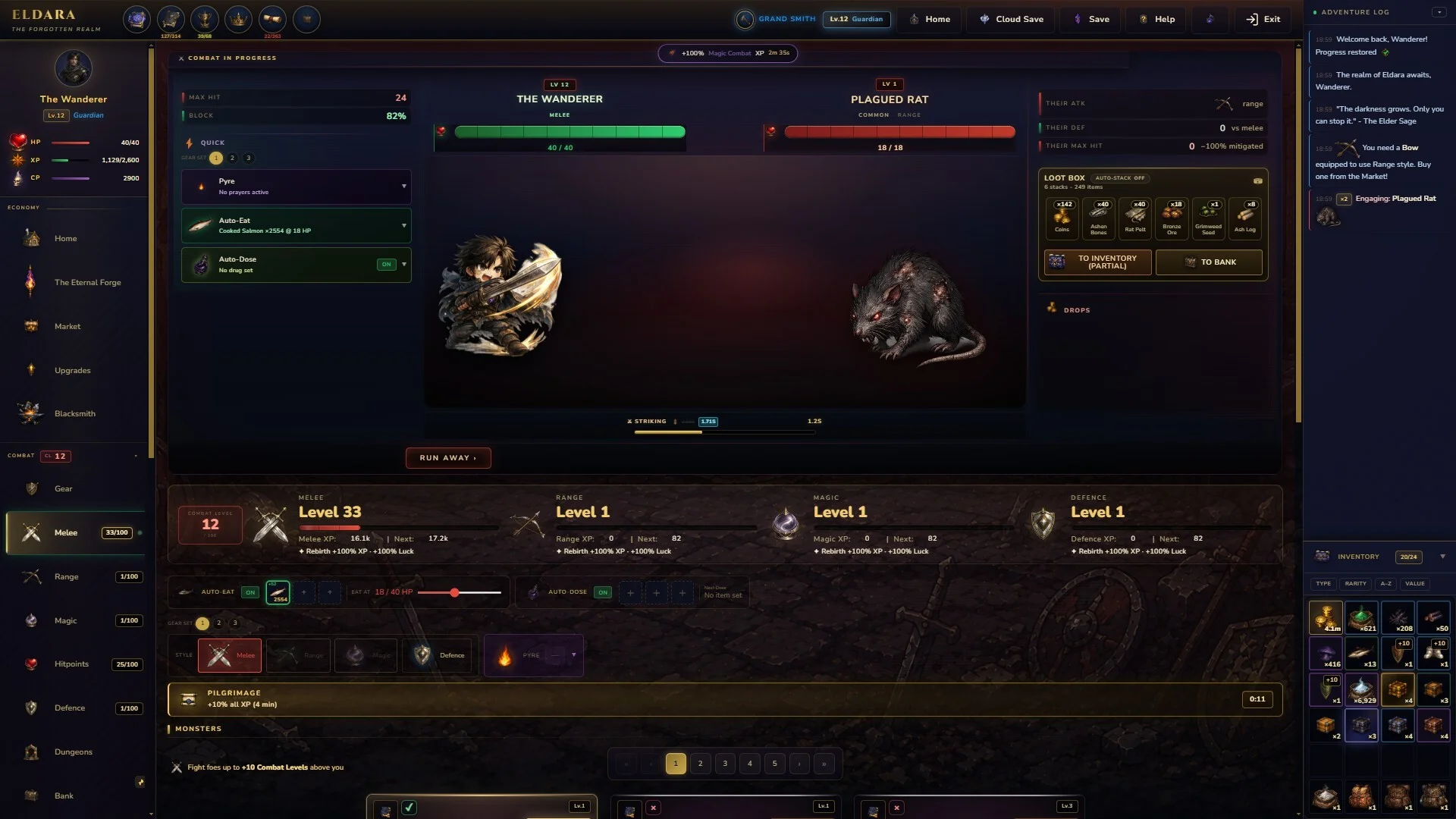
- Eldara guide: Build a flexible foundation before committing to specialized progression.
- Core priority: Track resources, reputation, skill requirements, and combat readiness together.
- Faction planning: Compare Ashen, Verdant, and Guilded Hammer ideas before choosing long-term goals.
- Resource strategy: Gather wood, stone, ores, bars, drops, and food with future crafting in mind.
- Combat preparation: Treat dungeons, faction conflicts, and travel risks as separate challenges.
Eldara guide: Understanding Your Progression
This Eldara guide focuses on practical planning rather than unconfirmed numerical builds. The available community discussion presents several possible progression ideas, including cultivation, construction, faction reputation, guilds, companions, expanded dungeons, and faction-specific buildings. These concepts should be treated as planning categories unless the game clearly confirms them through its current interface or updates.
A strong early approach is to avoid spending every resource immediately. Keep a reserve of common materials, record which activities produce them, and identify the skills connected to your preferred playstyle. This makes it easier to adapt if a future objective requires a combination of gathering, crafting, reputation, or combat.
| Progression Area | Main Purpose | Planning Habit |
|---|---|---|
| Gathering | Supplies wood, stone, ores, and other materials | Keep a reserve before crafting |
| Crafting | Converts materials into useful items or structures | Group recipes by resource type |
| Reputation | Supports faction-based progression ideas | Avoid locking into one faction too early |
| Combat | Prepares you for enemies, dungeons, and risks | Improve survivability before chasing harder content |
| Utility skills | May support farming, trade, construction, or travel | Track requirements before specializing |
Resource Planner
- Track wood, stone, ores, bars, and enemy drops.
- Save materials that may support crafting or construction.
- Use a simple reserve target before taking risks.
Faction Planner
- Compare each house by theme, goals, and possible bonuses.
- Treat proposed building tiers as ideas, not confirmed rewards.
- Keep reputation decisions reversible when possible.
Combat Planner
- Separate routine encounters from dungeon preparation.
- Upgrade defensive options before testing difficult content.
- Carry enough supplies for travel and unexpected events.
When a mechanic is not clearly confirmed, plan around its category instead of assuming exact rewards, tiers, or unlock requirements.
The community discussion also suggests a broader settlement system with faction-owned plots, buildings, and skill-based requirements. That proposal connects gathering, farming, crafting, trade, and reputation into one long-term loop. Even if the final implementation changes, the underlying lesson is useful: skills should be planned as a network rather than as isolated levels.
Skills, Resources, and Efficient Routes
Resource management is the most reliable foundation for a developing character. The discussion specifically connects cultivation with planting and resource gathering, while construction is described as a possible system that could combine woodcutting, cultivation, and crafting. It also raises farming, animals, fishing, cooking, leather production, and merchanting as possible ways to expand the economy.
Because exact experience rates and item values are not established in the available material, the best route is based on coverage. Rotate activities so that your character develops several useful inputs instead of becoming dependent on a single resource.
| Activity | Possible Output | Useful Pairing |
|---|---|---|
| Cultivation | Crops and processed farm resources | Cooking, trade, construction |
| Woodcutting | Logs and structural materials | Crafting, buildings, settlement goals |
| Mining | Ores and bars | Crafting, equipment, construction |
| Fishing | Fish and possible travel-related rewards | Cooking, exploration, trade |
| NPC encounters | Drops and situational materials | Combat, crafting, faction objectives |
Identify the Next Requirement
Before starting a long farming session, decide whether your next goal needs a skill level, a material, reputation, gold, or combat strength. Write down the requirement so every activity supports a clear objective.
Choose a Two-Resource Route
Pair one primary resource with a secondary activity. For example, combine gathering with combat or cultivation with crafting. This reduces downtime and gives the session more than one useful outcome.
Process Before Selling
Do not automatically sell every raw material. Check whether logs, ores, crops, fish, or enemy drops can support a higher-value craft, meal, structure, or future requirement.
Review Your Reserve
At the end of a route, compare what you gained with what you consumed. Maintain a reserve for repairs, travel, crafting, and unexpected encounters before spending surplus gold.
A useful inventory rule is to separate materials into three groups:
- Immediate-use materials support your current equipment, food, or crafting objective.
- Long-term materials may be valuable for settlement, construction, faction, or advanced recipes.
- Trade materials can be sold when they are not needed for a planned upgrade.
A good farming route should improve at least one current goal while preserving enough supplies for the next activity.
The proposed economy ideas also include animals, milk, cheese, leather, meat-based meal buffs, fishery upgrades, and merchanting or speechcraft. These are not confirmed data points, but they reveal a useful planning direction: preserve varied drops until you know whether they are more valuable as crafting inputs, consumables, or trade goods.
Faction Reputation and Settlement Choices
The community proposal describes three faction themes: Ashen, Verdant, and Guilded Hammer. It suggests that reputation could unlock different land plots, structures, perks, or faction-specific bonuses. The proposed examples include Ashen homes and barracks, Verdant natural or druidic structures, and Guilded Hammer houses or manors.
These names and building tiers should not be treated as a confirmed ranking system. Instead, use them as a comparison framework when deciding which faction identity best fits your preferred activities.
| Faction Theme | Proposed Identity | Possible Focus |
|---|---|---|
| Ashen | Harsh lands, camps, barracks, and homes | Survival, combat, endurance |
| Verdant | Natural areas, gardens, mushroom houses, and treetops | Cultivation, healing, nature skills |
| Guilded Hammer | Workshops, homes, trade, and construction | Crafting, speechcraft, commerce |
Ashen Planning
Prepare for a direct, resilient playstyle. Keep combat supplies, durable equipment, and basic construction materials available.
Verdant Planning
Prioritize cultivation, food production, healing concepts, and nature-related utility if those systems become available.
Guilded Hammer Planning
Preserve processed materials and gold for crafting, construction, trade, and negotiation-focused objectives.
Reputation planning should follow three principles:
- Compare the cost of access with the practical value of the reward.
- Avoid spending rare materials on cosmetic or structural goals before core progression is secure.
- Keep a neutral resource reserve so changing priorities does not stop your progress.
The proposed settlement interface places factions, building choices, construction, and buffs in one menu. If a similar system becomes available, inspect the full cost before confirming a plot or structure. A building may require more than gold; the proposal also mentions resources, reputation, and skill locks.
| Requirement Type | Example Mentioned in Planning Ideas | Preparation |
|---|---|---|
| Currency | Gold for plots, buildings, or trade | Keep a spending reserve |
| Materials | Ores, bars, logs, beams, frames, and stone | Gather before committing |
| Reputation | Faction standing and tier access | Focus on one objective at a time |
| Skill level | Construction, speechcraft, or related skills | Avoid ignoring utility skills |
| Drops | NPC items needed for special structures | Store uncommon materials |
Do not assume a faction, building tier, or bonus is currently available unless Eldara confirms it through its live systems or official updates.
Combat, Dungeons, and Risk Management
Combat planning should account for more than damage. The available Eldara discussion explores stronger dungeon tiers, factional enemies, bounties, companions, mercenaries, travel dangers, and random events. These are proposed expansions, so they should be used as preparation categories rather than as confirmed mechanics.
For current progression, build a balanced combat routine. Improve the skills and equipment that help you survive repeated encounters, then test more demanding content only after your resource supply is stable. A strong character who cannot replace consumables or recover from losses may progress more slowly than a slightly weaker but better-prepared one.
| Challenge Type | Preparation Priority | Risk Control |
|---|---|---|
| Routine enemies | Reliable damage and basic defense | Fight within your sustainable range |
| Dungeons | Recovery supplies and consistent combat output | Stop before resources become critical |
| Faction conflicts | Combat stats plus reputation planning | Confirm the objective before engaging |
| Travel events | Extra supplies and escape options | Avoid carrying every valuable item |
| Elite proposals | Stronger gear and larger reserves | Treat them as optional until ready |
The discussion refers to a current dungeon idea involving four kills and proposes easy, medium, hard, and elite variants with different enemy counts and rewards. Since those tiers are presented as suggestions, do not publish them as established game rules. You can still use the concept to organize your own combat goals:
- Routine clear: Practice efficient fights while limiting supply use.
- Standard challenge: Test whether your equipment handles multiple encounters.
- Hard challenge: Enter only with a recovery plan and replacement supplies.
- Elite goal: Attempt after your build can absorb mistakes without losing essential progress.
The same proposal discusses companions, druids, mercenaries, monsters, and random events involving healing, potions, surprise attacks, or lost allies. These ideas emphasize the value of flexible preparation. Carry a mix of healing, damage, and utility options rather than relying on one expected encounter pattern.
Use difficulty as a progression test, not as a requirement to rush. If a fight drains your supplies faster than your route replaces them, improve preparation first.
Progression Checklist and Long-Term Goals
A practical Eldara roadmap combines short-term gathering with long-term flexibility. Start by defining one immediate upgrade, one skill objective, and one future system you want to support. This prevents the common mistake of collecting materials without knowing why they matter.
Core Progression Checklist:
- Record your next skill, material, gold, or reputation requirement
- Build a reserve of logs, stone, ores, bars, and useful drops
- Pair gathering with crafting, combat, cultivation, fishing, or trade
- Compare Ashen, Verdant, and Guilded Hammer goals before committing
- Test difficult encounters only after securing recovery supplies
Use the following roadmap when planning a new progression cycle:
| Phase | Main Goal | Recommended Focus |
|---|---|---|
| Foundation | Stabilize supplies and basic skills | Gather, craft, and preserve reserves |
| Development | Connect multiple activities | Pair skills and process useful materials |
| Specialization | Choose a faction or playstyle direction | Invest in reputation and related skills |
| Challenge | Test combat and dungeon readiness | Improve defense, recovery, and consistency |
| Expansion | Pursue settlement or advanced system goals | Confirm requirements before spending rare items |
The strongest long-term approach is flexible specialization. Focus enough to make progress, but avoid abandoning every other skill. Cultivation may support food or trade; woodcutting and mining may support construction; combat may provide drops or access to dangerous areas; speechcraft may support negotiation if the proposed system is implemented.
For deeper theorycrafting, join the Steam Community discussion on passives, unlocks, and game ideas.
Keep a written progression log with three columns: current objective, materials owned, and next confirmed requirement. This makes future updates easier to evaluate.
Q: What is the main purpose of this Eldara guide?
It provides a planning framework for skills, resources, faction reputation, settlement concepts, combat preparation, and long-term progression without presenting community proposals as confirmed mechanics.
Q: Which Eldara faction should I choose?
The available discussion presents Ashen, Verdant, and Guilded Hammer as faction themes connected to possible buildings and bonuses. Compare your preferred activities first, and confirm the live rewards before making a permanent commitment.
Q: What resources should I save?
Keep useful reserves of logs, stone, ores, bars, crops, fish, food ingredients, and uncommon NPC drops. The exact value of each material may change with crafting, trade, or construction systems.
Q: How should I prepare for difficult combat content?
Build consistent damage, survivability, recovery supplies, and a replacement plan before attempting harder encounters. Treat proposed dungeon tiers and elite challenges as goals rather than confirmed requirements.