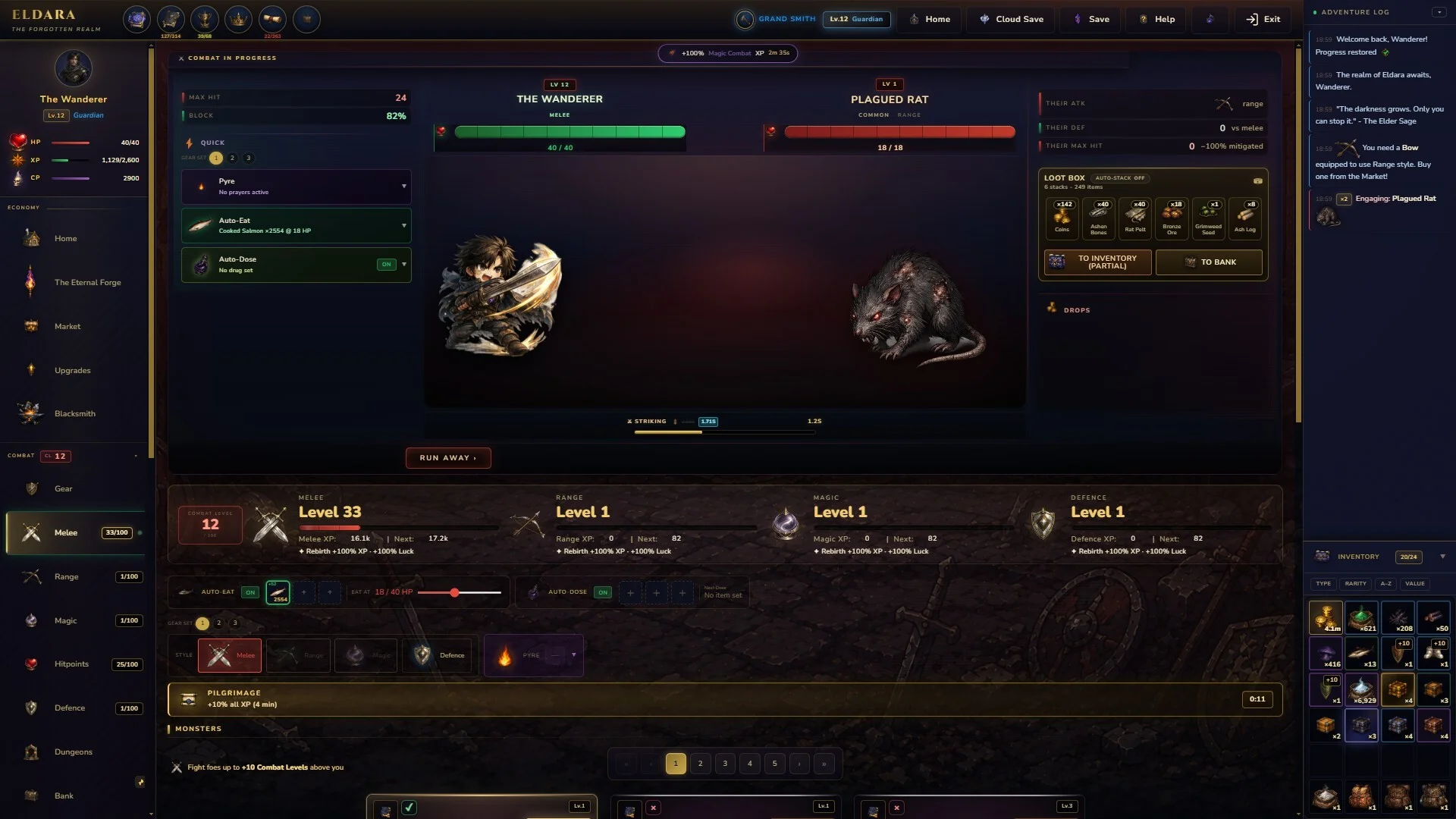
- Eldara gameplay guide: Build your plans around factions, skills, resources, and reputation.
- Faction focus: Compare Ashen, Verdant, and Gilded Hammer goals before committing resources.
- Skill planning: Track cultivation, construction, crafting, fishing, combat, and speechcraft ideas.
- Dungeon approach: Treat four-kill dungeon runs as the current discussion baseline, not a universal difficulty rule.
- Progression warning: Several settlement and companion systems remain discussion concepts rather than confirmed features.
Eldara Gameplay Guide: Understand the Current Systems
Eldara gameplay guide planning is easiest when confirmed gameplay references are separated from community-proposed systems. The available Steam discussion, posted on June 16, 2026, focuses on passives, unlocks, resource gathering, factions, construction, dungeons, companions, and random events. It presents many ideas as requests or possibilities, so this article uses them as a planning framework rather than claiming every feature is currently playable.
The most useful approach is to organize progression into four categories:
- Core activity: combat, gathering, crafting, fishing, or dungeon encounters.
- Long-term unlock: passive upgrades, faction reputation, skill requirements, or house progression.
- Resource loop: wood, stone, ores, bars, food, animal products, and crafted materials.
- Risk and reward: travel events, mercenary losses, surprise attacks, negotiations, or special dungeon rewards.
| Planning Area | What to Track | Why It Matters |
|---|---|---|
| Skills | Combat, cultivation, construction, crafting, fishing, speechcraft | Skill gates may affect future unlocks |
| Factions | Ashen, Verdant, Gilded Hammer | Reputation may determine access to houses or perks |
| Resources | Wood, stone, ores, bars, food, crafted structures | Proposed buildings would require several material types |
| Encounters | Dungeons, NPCs, random events, travel risks | Risk management can protect time and resources |
| Unlocks | Passives, buildings, buffs, companions, tokens | Long-term progression depends on prioritization |
The best early habit is to record what each activity produces before spending materials. If a resource can support crafting, settlement expansion, or faction progression, it should not be treated as disposable. Keep a small reserve until the purpose of each material becomes clearer.
Use a simple progression log for skills, faction reputation, and stored materials. This prevents one attractive upgrade from consuming resources needed for a broader unlock path.
The original discussion can be reviewed through the Eldara Steam community discussion about passives and unlocks. It is useful for identifying active community priorities, but proposed features should be checked in-game before being treated as established mechanics.
Choose a Faction Path Without Wasting Progress
The discussion describes three faction identities: Ashen, Verdant, and Gilded Hammer. It also suggests that faction reputation could eventually unlock different homes, buildings, or bonuses. Because the post frames these ideas as possible additions, use the faction themes as a decision-making model rather than a confirmed tier list.
| Faction | Community-Themed Direction | Potential Planning Focus |
|---|---|---|
| Ashen | Tents, barracks, homes, larger residences | Combat readiness, housing, defensive progression |
| Verdant | Land, mushroom homes, druidic spaces, treetop designs | Cultivation, nature-based resources, healing concepts |
| Gilded Hammer | Workshops, homes, manors, construction | Crafting, building materials, trade, speechcraft |
| Any faction | Reputation-based expansion | Save resources until requirements are known |
Before selecting a long-term direction, compare the faction against your preferred activity:
- Choose an Ashen-oriented plan if your priority is combat preparation, barracks-style support, or direct faction advancement.
- Choose a Verdant-oriented plan if cultivation, healing events, farming, or nature-themed production interests you.
- Choose a Gilded Hammer-oriented plan if you prefer construction, crafting, merchanting, or negotiation-based progression.
The proposed system also suggests that reputation could have multiple tiers, with more advanced buildings becoming available at higher standing. Do not assume exact rank names or requirements. Instead, treat reputation as a resource that may have future value and avoid spending it impulsively if the game presents several faction choices.
Ashen Planning
- Combat-centered preparation
- Barracks and housing concepts
- Useful for players who favor direct encounters
Verdant Planning
- Cultivation and healing concepts
- Farming and nature-themed production
- Useful for resource-focused progression
Gilded Hammer Planning
- Construction and crafting emphasis
- Trade and speechcraft possibilities
- Useful for flexible economic planning
The discussion does not verify exact reputation thresholds, building costs, or faction-exclusive bonuses. Confirm each requirement in Eldara before committing rare materials or changing your progression route.
A flexible strategy is to develop broadly until faction rewards are clearly defined. Leveling one practical activity while maintaining a reserve of common materials gives you more options than specializing around an unconfirmed bonus.
Build a Practical Skill and Resource Routine
Several skill concepts appear throughout the discussion, including cultivation, construction, woodcutting, crafting, fishing, combat, speechcraft, and possible guild-related activities. The thread also connects these skills into production chains. For example, construction could use wood, stone, bricks, ores, bars, and crafted structural parts, while cultivation could support food or animal products.
| Skill or Activity | Resource Loop | Suggested Use |
|---|---|---|
| Cultivation | Plants, farmland, animal products | Support food, cooking, healing, or trade planning |
| Construction | Wood, stone, bricks, beams, frames | Reserve materials for structures and upgrades |
| Crafting | Ores, bars, cloth, leather, gathered items | Convert raw resources into useful equipment or goods |
| Fishing | Fish and possible location-based rewards | Pair with cooking or travel planning |
| Speechcraft | Dialogue, trade, negotiation concepts | Keep available if faction or merchant checks appear |
| Combat | Stats, gear, enemy encounters | Prepare for dungeons, bounties, and faction conflicts |
A productive routine should follow three stages:
- Gather before specializing. Collect a reasonable spread of materials instead of focusing on one resource category.
- Process only what has a clear purpose. Raw materials may be more valuable for future construction or crafting than immediate conversion.
- Review the loop after every unlock. A new passive, recipe, faction option, or activity can change which resource is most valuable.
The cultivation concept deserves special attention because the discussion connects it to time-limited resource rotations. If Eldara uses timed gathering windows, a cultivation-style upgrade could reduce missed opportunities by allowing resources to be produced or collected later. Until such a feature is confirmed, the safe practice is to prioritize available activities and avoid planning around automatic production.
Record Your Current Inputs
List the resources, skills, faction standing, and combat requirements you currently have. This creates a baseline for every upgrade decision.
Separate Immediate and Long-Term Materials
Keep common materials for current crafting, but reserve unusual ores, bars, structural parts, and valuable drops for possible faction or construction requirements.
Pair Skills Into Loops
Combine gathering with crafting, cultivation with cooking, fishing with food production, and combat with dungeon or bounty goals when those activities are available.
Test One Upgrade at a Time
After unlocking a passive or activity, measure whether it improves gathering speed, survivability, production, or access before investing further.
The strongest general routine is not the one with the most activities. It is the one that turns gathered materials into a clear next objective while preserving a reserve for future unlocks.
This method also helps manage uncertainty. When a system is still being expanded, broad preparation protects your progress from balance changes or newly introduced requirements.
Combat, Dungeons, and Risk Management
The discussion references combat against factional NPCs, bounties, dungeons, travel events, and possible difficulty tiers. It also mentions four kills as a dungeon amount currently observed by the poster, alongside ideas for easy, medium, hard, and elite versions. These details should be treated as a current discussion reference rather than a confirmed dungeon ladder.
| Encounter Type | Known Discussion Reference | Preparation Priority |
|---|---|---|
| Standard dungeon | Four kills mentioned by the poster | Bring reliable damage and recovery options |
| Harder dungeon concept | More enemies and stronger NPCs proposed | Improve stats before testing higher risk |
| Elite dungeon concept | Ten kills and special tokens proposed | Treat as an advanced target, not a guaranteed feature |
| Bounty or faction target | NPC punishment and house conflict concepts | Build combat and reputation flexibility |
| Travel event | Surprise attacks, injuries, or lost companions proposed | Keep recovery supplies and avoid overcommitting |
For a safer combat loop, prepare around consistency rather than maximum damage:
- Improve the statistics that directly support your usual combat action.
- Keep recovery items or healing options available before entering uncertain encounters.
- Avoid carrying every valuable resource into a risky location.
- Test one dungeon or target at a time so losses are easier to evaluate.
- Record enemy behavior, kill requirements, and reward patterns as they become available.
The proposed dungeon structure also suggests a possible token economy, where difficult encounters could award currency for pets, gear, or unique crafting items. Since this reward system is not verified in the source, do not farm around assumed token drops. If tokens or special rewards appear in-game, compare their opportunity cost against ordinary resource gathering.
Treat every unfamiliar difficulty tier as an experiment. Enter with a clear exit condition, enough recovery capacity, and only the materials you can afford to risk.
Companions and mercenaries are another area where planning should remain cautious. The discussion proposes hireable allies, druid-like summons, time limits, deaths, and enemies attacking companions. These ideas support a useful general rule: if an ally system becomes available, evaluate its cost, duration, survivability, and effect on encounter speed before making it part of your standard route.
Progression Checklist and Long-Term Goals
Long-term progression in Eldara can be organized around milestones rather than assumed feature availability. The discussion combines faction reputation, land ownership, buildings, production, guilds, companions, dungeons, bounties, and negotiation. That creates several possible paths, but the safest plan is to establish a foundation that remains useful across all of them.
| Milestone | Completion Standard | Benefit of Preparing Early |
|---|---|---|
| Resource base | Maintain wood, stone, ores, bars, food, and crafted supplies | Supports multiple possible unlock routes |
| Skill spread | Develop gathering, crafting, combat, and one utility skill | Reduces dependence on a single progression path |
| Faction record | Track reputation and available choices | Helps compare future building or perk options |
| Combat baseline | Complete manageable encounters consistently | Provides confidence before higher-risk content |
| Production plan | Know what each material is intended to create | Limits waste and improves storage decisions |
Essential Eldara Goals:
- Track faction reputation and every visible unlock requirement
- Maintain a reserve of wood, stone, ores, bars, and food
- Develop at least one gathering skill and one combat option
- Test dungeon requirements before carrying valuable materials
- Recheck proposed systems before treating them as confirmed mechanics
A settlement-focused route should begin only after the game clearly shows the required land, building interface, materials, and faction conditions. The discussion imagines plots purchased from factions, tiered structures, and buildings that provide skill bonuses. If these systems are implemented, compare each structure by cost, bonus, production value, and upgrade path.
A trade-focused route can use the same foundation. Merchanting, speechcraft, faction negotiation, and market activity are proposed as ways to create additional value from resources. Keep trade materials separate from combat supplies so an economic experiment does not weaken your ability to complete ordinary encounters.
Build a flexible account first. Broad skills, stored materials, and careful reputation tracking will support settlement, combat, crafting, or trade goals as Eldara develops.
The most important distinction is between available progression and desired progression. Available progression is what the interface, quests, skills, and encounters currently allow. Desired progression includes community ideas such as player-owned farms, guilds, mercenaries, advanced dungeons, and faction buildings. Keeping those categories separate makes your notes more accurate and your decisions more efficient.
Eldara Gameplay Guide FAQ
Q: What is the best starting strategy in Eldara?
Use a flexible routine: gather several resource types, develop a practical skill and a combat option, track faction reputation, and keep reserves for future unlocks. Avoid specializing around unconfirmed bonuses.
Q: Which Eldara faction should I choose?
The available discussion associates Ashen with combat-oriented housing ideas, Verdant with cultivation and nature themes, and Gilded Hammer with construction, crafting, and trade. Exact bonuses and requirements are not verified, so choose based on your preferred playstyle after checking the in-game options.
Q: Are Eldara construction, farming, and companion systems confirmed?
The source presents player-owned farms, construction, faction buildings, guilds, mercenaries, companions, and expanded events as suggestions or possible systems. Treat them as planning concepts unless the current game interface confirms them.
Q: How should I prepare for Eldara dungeons?
Start with encounters you can complete consistently, bring recovery options, limit the valuable materials you carry, and record kill requirements and rewards. Four kills are mentioned in the discussion, while larger difficulty tiers remain proposed rather than established.
Eldara systems may change as development continues. Recheck faction choices, dungeon rules, skill interactions, and settlement features before relying on an older progression plan.
This Eldara gameplay guide is best used as a structured planning reference: protect your resources, compare faction directions, connect skills into production loops, and verify proposed mechanics in the live game before investing heavily.